Self-hosted status pages and uptime monitoring for small services
Compare dashboard monitoring, configuration-based checks and public incident updates using the same test outage.
Source check ·
Leer en español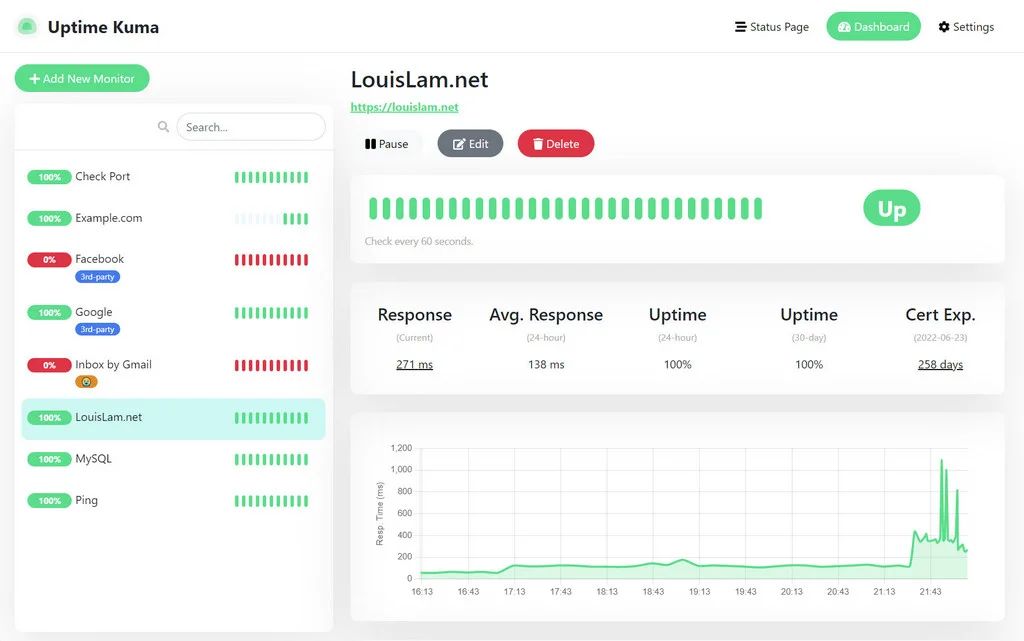
Choose a check that reflects something a visitor can actually do, such as loading a page backed by your database. Then separate two decisions. First decide how the team learns about a failure. Then decide what customers should see while you investigate. Run the test from somewhere that stays online if your production host goes down.
Compare the options

Uptime Kuma
An interface for configuring checks and notifications
Workflow
Add a test endpoint, pick the condition you expect to pass and verify the alert and recovery notifications.
What to check
Put the monitoring instance somewhere that remains available during an outage. Check the status page and notification integrations you need.
Official details
Gatus
Monitoring rules maintained in configuration
Workflow
Describe a known-good response in a configuration file and check what gets recorded when the response changes.
What to check
A configuration-based workflow makes changes reviewable but requires the team to own its storage, configuration and secrets.
Official details
Kener
Public availability and incident updates
Workflow
Add a service to a test page, simulate an outage and write a short incident update. Open it in a logged-out window.
What to check
Decide how incidents will be communicated and which internal details should stay private. Check update permissions before sharing the page.
Official detailsBefore you choose
- Trigger a real test failure, measure how quickly the alert arrives, and verify the separate recovery notice.
- Open the public page from a phone without logging in. Check that the labels tell a customer what is affected.
- Test the monitoring page when the monitored host is offline. Write down who owns the check and who can post an incident update.